
Research & Field Operations
The Department of Wildlife supports scientific research, wildlife conservation and habitat protection throughout the United Kingdom.
Our researchers work alongside veterinary professionals, environmental agencies and local authorities to better understand animal illness, protect vulnerable species and preserve the environments on which wildlife populations depend.
By combining laboratory research with responsible field operations, the Department aims to produce practical, long-term benefits for wildlife and the wider environment.
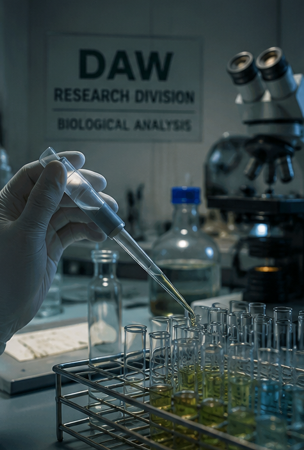
Researching Cures for Animal Illness
DAW scientists investigate illnesses affecting wild animal populations, including infectious diseases, environmental conditions and unexplained changes in animal health.
Biological samples collected by trained field personnel are examined within specialist Department laboratories. This research helps identify emerging health risks and supports the development of improved treatments, preventative measures and wildlife rehabilitation programmes.
Where appropriate, our findings are shared with veterinary organisations and environmental partners to help protect both individual animals and wider wildlife populations.
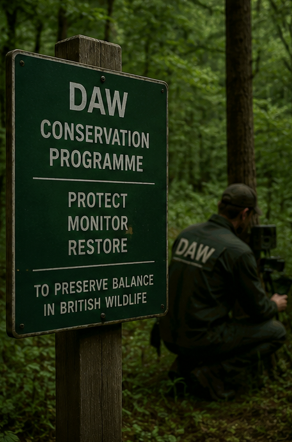
Supporting Wildlife Conservation
The Department monitors vulnerable animal populations and supports conservation efforts in areas experiencing ecological pressure, habitat disruption or unusual changes in wildlife behaviour.
Our conservation teams use field surveys, remote monitoring equipment and population assessments to identify species that may require additional protection.
DAW works with landowners, conservation groups and local authorities to reduce environmental disturbance and promote the safe recovery of threatened populations.
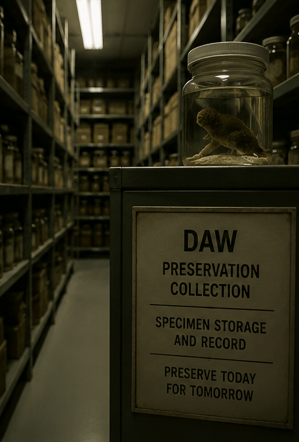
Preserving Habitats for the Future
Healthy wildlife populations depend upon safe and stable environments. DAW preservation programmes focus on protecting woodland, coastal and freshwater habitats from long-term environmental damage.
Department personnel monitor ecological conditions, investigate potential hazards and coordinate recovery work in areas affected by pollution, disease or unauthorised human activity.
These programmes are designed to preserve natural habitats for future generations while allowing wildlife populations to recover with minimal disturbance.
Field Operations
DAW Field Operations personnel provide practical support for the Department's scientific and environmental work. Teams are deployed throughout the United Kingdom to conduct surveys, recover samples and assess reports of unusual wildlife activity.
Field personnel are trained to work safely within protected habitats and to cooperate with emergency services, local authorities and recognised wildlife organisations.
Operational Responsibilities
- Wildlife incident investigation
- Biological sample recovery
- Environmental hazard assessment
- Protected habitat monitoring
- Animal population surveys
- Wildlife rehabilitation support
- Public safety coordination
- Emergency environmental response
Current Operations
| Operation | Status |
|---|---|
| Highlands Wildlife Survey | Active |
| Southampton Woodland Monitoring | Restricted |
| Rozel Reservoir Assessment | Closed |
| Sector Four Investigation | Classified |
Featured Field Researcher

Dr Marcus Vale
Senior Research Officer
Dr Vale specialises in wildlife disease assessment, biological sample recovery and the investigation of unusual changes in animal behaviour.
Since founding the Department in 1987, he has supported research and conservation programmes throughout the United Kingdom.
His recent assignments include the Southampton Woodland Monitoring programme and the Sector Four environmental assessment.
Public Guidance
Members of the public should not approach injured, distressed or unidentified wildlife. Areas displaying Department restriction notices should not be entered without authorisation.
Reports concerning unusual animal behaviour or suspected environmental hazards can be submitted through the Department's contact page.